
Age-Related Macular Degeneration (AMD): What You Need to Know
Age-Related Macular Degeneration (AMD) is a common eye condition that affects the macula, the central part of the retina responsible for clear, detailed vision. This is the vision we rely on for reading, recognising faces, driving and everyday activities.
At L&F Eyecare, we regularly see patients who are surprised to learn they have early signs of AMD — simply because it often develops without obvious symptoms.
Understanding AMD and having regular eye examinations are two of the most important steps you can take to protect your long-term vision.
What is AMD?
Age-Related Macular Degeneration (AMD) causes gradual changes to the macula, leading to a loss of central vision over time. Peripheral (side) vision is usually unaffected, but tasks that require fine detail can become more difficult as the condition progresses.
There are two main types of AMD:
-
Dry AMD – the most common form, which progresses slowly
-
Wet AMD – less common, but more serious and can progress quickly
Early detection is critical, particularly for identifying changes that may require referral or treatment.
Early signs of AMD to watch for
In the early stages, AMD may not cause any noticeable changes to your vision. As it progresses, symptoms may include:
-
Blurred or fuzzy central vision
-
Difficulty reading or seeing fine detail
-
Straight lines appearing wavy or distorted
-
A dark or empty spot in the centre of your vision
If you notice any of these changes, it’s important to book an eye examination as soon as possible.
Who is most at risk of AMD?
You may be at increased risk if you:
-
Are over the age of 50
-
Have a family history of AMD
-
Smoke or have smoked in the past
-
Have high blood pressure or cardiovascular disease
-
Spend long periods outdoors without UV eye protection
Even if you don’t have symptoms, regular eye exams are essential — particularly as you get older.
How we detect AMD
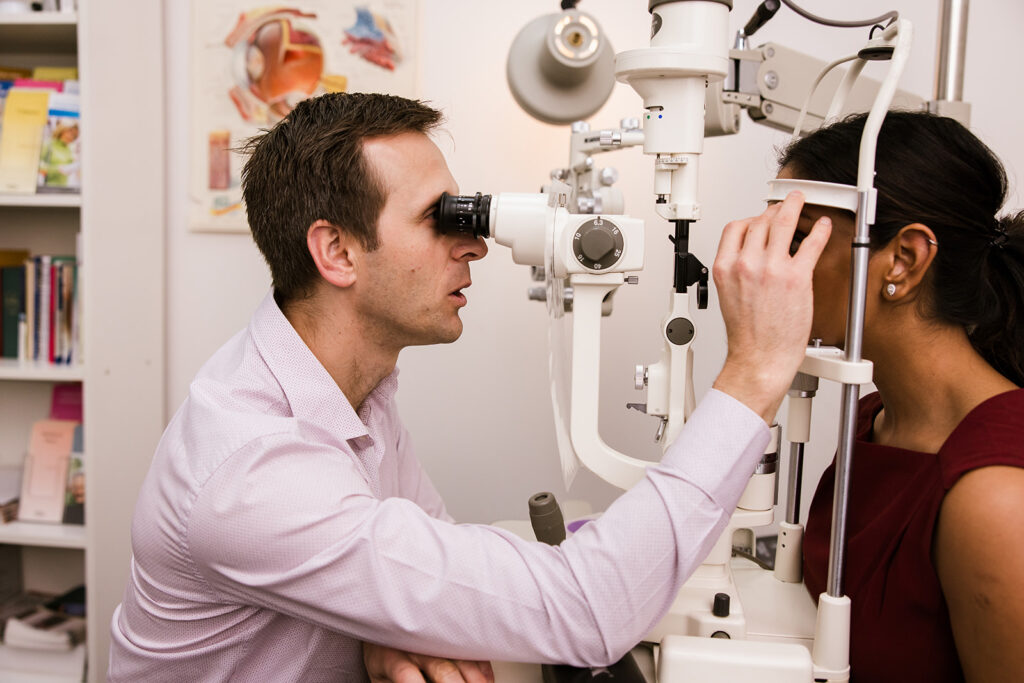
AMD can often be detected before vision is affected during a comprehensive eye examination. By carefully examining the health of your retina and macula, we can identify early changes and monitor them over time.
Early detection allows us to:
-
Track changes closely
-
Provide tailored lifestyle and nutrition advice
-
Discuss appropriate supplements when indicated
-
Refer promptly if treatment is required
Our goal is always to help you maintain the best possible vision for as long as possible.
Looking after your eye health as you age
Your eyes naturally change as you get older, but proactive care can make a real difference. Regular eye examinations don’t just check how well you see — they assess the overall health of your eyes.
If you’re over 50, have a family history of eye disease, or it’s been a while since your last eye test, now is the perfect time to book an appointment.
Frequently Asked Questions about Age-Related Macular Degeneration (AMD)
Is AMD preventable?
While AMD can’t always be prevented, healthy lifestyle choices can reduce your risk. This includes not smoking, eating a balanced diet rich in leafy greens, wearing UV-protective sunglasses, and having regular eye examinations.
Can AMD be treated?
There is currently no cure for AMD, but early detection and management are vital. Certain forms of AMD can be treated, and early intervention can help slow progression and protect vision.
Does AMD cause blindness?
AMD does not cause total blindness, but it can significantly affect central vision if left unmanaged. Early diagnosis greatly improves outcomes.
How often should I have my eyes checked?
For most adults over 50, we recommend an eye examination every one to two years — or more frequently if advised by your optometrist.
If I have no symptoms, do I still need an eye exam?
Yes. Many eye conditions, including AMD, can develop without symptoms in the early stages. Regular eye exams are the best way to detect changes early.
At L&F Eyecare, we’re committed to helping our local community protect their vision at every stage of life. If you have concerns about AMD, or it’s time for your next eye check, our friendly team is here to help.
📞 Book your comprehensive eye examination today.
To find out more about AMD, head to the Macular Disease Foundation website